NVIDIA stories
Businesses and creators could cut cloud reliance as MSI widens its laptop push beyond gaming with local AI processing and broader productivity features.
The seed round will help expand Physicl's platform, which lets physical AI teams recreate edge cases and test fixes against them.
More than 6,500 customers have adopted Dell's AI Factory with NVIDIA as it adds deskside systems, servers and managed services for agentic AI.
Strong demand in security and AI helped lift third-quarter revenue 20% to USD $2.08 billion, prompting a higher full-year forecast.
The deal will help DKRZ cut energy use by about 75% per simulated year as it replaces Levante with a new climate modelling system in 2028.
Four customers each committed more than USD $1 billion as demand for AI storage systems pushed VAST's aggregate customer pledges above USD $10 billion.
Enterprises can now inspect AI prompts and responses across clouds and data centres through a validated Fortinet-Equinix architecture.
The software aims to cut downtime and boost output for operators of massive GPU clusters by turning event storms into likely root causes.
Governments are getting new AI tools for healthcare, labour services and secure data handling as projects roll out from Brussels to Athens.
The tie-up could help hyperscalers bring AI capacity online sooner by standardising how compute, power and cooling are deployed.
German industrial customers can now get private AI cloud environments within hours, as the service starts running NVIDIA DSX OS at scale in production.
Enterprises deploying autonomous AI agents may gain tighter safeguards as the two firms add runtime controls, governed inference and day-zero hardware support.
IT teams can now monitor AI workstations and deskside supercomputers alongside laptops and servers, tightening oversight as firms adopt NVIDIA hardware.
Rising AI assistant traffic is forcing travel platforms to return bookable fares faster, prompting Amadeus to test NVIDIA chips and models.
Customers could see faster search and AI responses, with some Elastic Jina models running up to 8x quicker after a shift to NVIDIA RTX Pro 6000 GPUs.
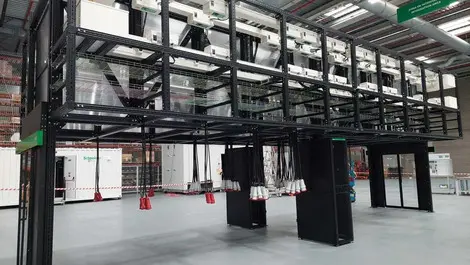
Rising demand for AI computing is pushing operators towards repeatable builds, and Schneider Electric says its new modular design can speed deployments.
The new machine gives businesses enough memory to run several AI models at once on dedicated hardware, with pricing from €3,599 a month.
It lets developers shift non-urgent AI jobs onto off-peak capacity at discounts of up to 30%, reducing inference costs without extra infrastructure.
The startup says its simulation tool could cut costly robot training and reduce the risk of damaging machines before deployment in factories and warehouses.
Europe's AI buildout is set for a boost as NVIDIA commits nearly USD $10 billion and promises faster, safer data centre deployment.